
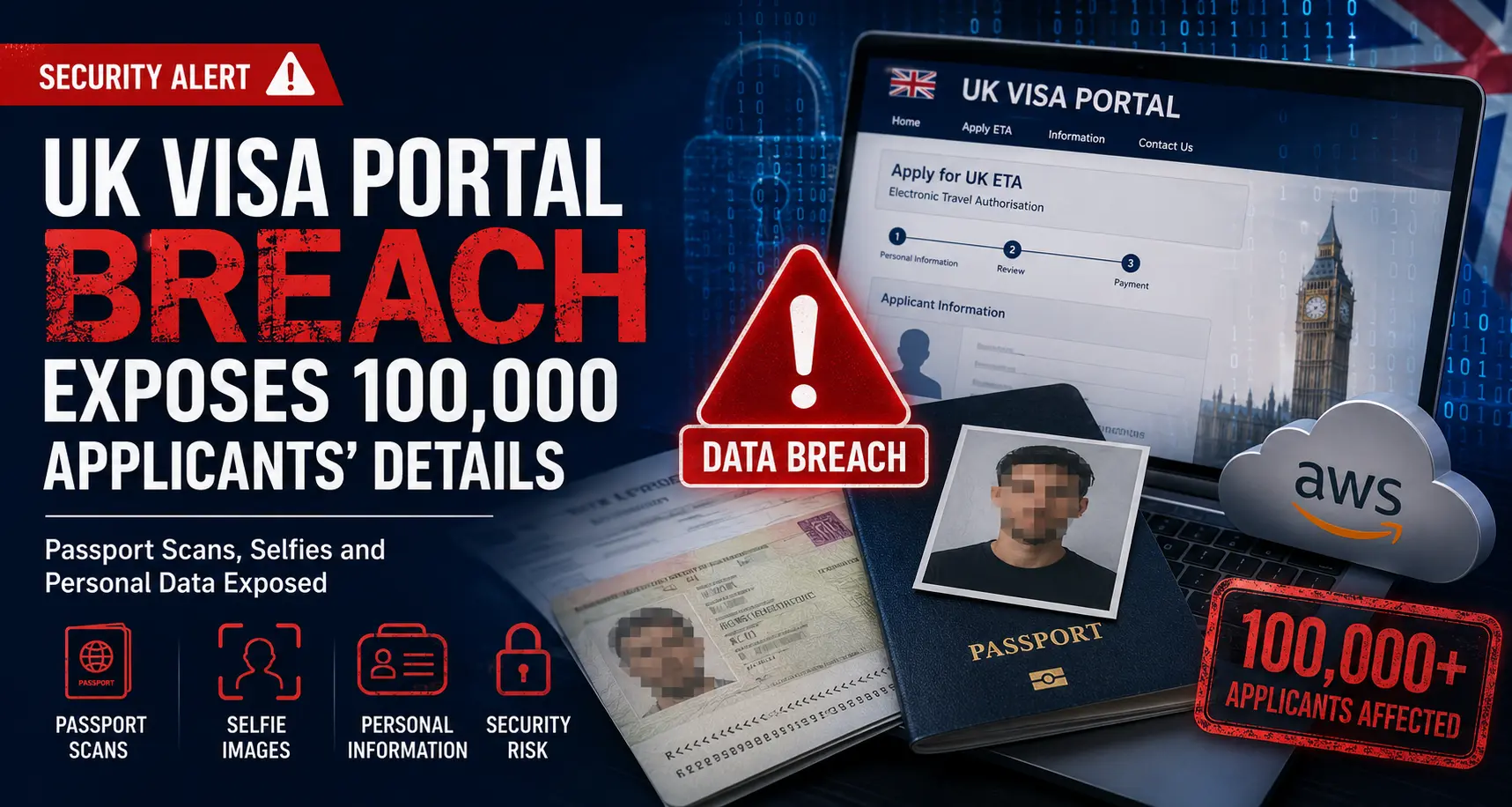
The growing shift toward digital immigration systems has made visa applications faster, more convenient, and accessible from anywhere in the world.
However, a major security incident involving a third-party visa website has raised serious concerns about data privacy, identity theft, and online immigration scams.
In May 2026, reports emerged that a website called UK Visa Portal, which is not affiliated with the British Government, exposed highly sensitive personal information belonging to visa applicants.
According to investigations first reported by TechCrunch, the security lapse potentially exposed more than 100,000 applicant documents, including passport scans, selfie verification photos, and other identifying information.
The incident has sparked widespread concern among travelers, immigration applicants, cybersecurity professionals, and privacy advocates worldwide.
But what exactly happened?
Who is affected?
How dangerous is this breach?
And what lessons can visa applicants learn from it?
This detailed guide explains everything currently known about the UK Visa Portal breach, the risks involved, official responses, and how travelers can protect themselves when applying for UK visas and Electronic Travel Authorisations (ETAs).
What Is UK Visa Portal?
One of the most important facts to understand is that UK Visa Portal is not an official UK Government website.
According to reporting, the platform operates as a third-party visa assistance service that charges users fees to help submit UK travel authorization applications.
Many users reportedly believed they were using an official government service when submitting their applications.
However, UK ETA applications can be completed directly through the official UK Government website without using third-party intermediaries in most cases.
This distinction has become especially important following the data exposure incident.
What Happened in the UK Visa Portal Data Breach?
According to TechCrunch’s investigation, an anonymous source alerted journalists to a serious security lapse involving UK Visa Portal’s online infrastructure.
The source claimed that sensitive applicant documents were being exposed through an Amazon Web Services (AWS) cloud storage system.
Investigators later verified that the exposed files were genuine and belonged to actual applicants.
The exposed information reportedly included:
- Passport scans
- Selfie verification photographs
- Identity verification documents
- Personal information
- Travel-related records
The scale of the incident is particularly alarming because reports suggest at least 100,000 documents may have been accessible.
Understanding the AWS S3 Bucket Exposure
The breach reportedly involved an Amazon S3 storage bucket.
Amazon S3 is a cloud storage service widely used by companies to store files and documents online.
Importantly, reports indicate the bucket itself was not openly listing files to the public.
However, the files stored inside were still accessible if someone knew the direct web address of a file.
According to the source who discovered the issue, a backend flaw on the website allegedly allowed access to file listings inside the storage bucket.
Cybersecurity experts often describe this type of incident as a cloud misconfiguration, one of the most common causes of modern data breaches.
Why This Breach Is Extremely Serious
Not all data leaks carry the same level of risk.
This incident is particularly concerning because of the nature of the information involved.
According to reports, exposed documents included:
Passport Information
Passport scans can reveal:
- Full names
- Passport numbers
- Date of birth
- Nationality
- Passport issue dates
- Passport expiry dates
Biometric Selfies
Applicants often upload selfie photographs during identity verification processes.
These images are increasingly used for:
- Identity checks
- Facial recognition systems
- Travel verification systems
- Digital onboarding procedures
Location Data
One of the most alarming revelations was that some uploaded photographs reportedly contained embedded GPS coordinates.
These coordinates could potentially reveal where the image was taken.
In certain cases, the location data was reportedly accurate enough to identify a person’s home address.
This means exposed records could potentially contain:
- A face
- A passport
- A physical location
All within a single file.
Who Discovered the Exposure?
The incident was first brought to public attention by an anonymous source who contacted TechCrunch.
The source reportedly:
- Identified the exposed files
- Observed backend vulnerabilities
- Verified that applicant documents were accessible
TechCrunch then independently verified the authenticity of the data by contacting affected individuals directly.
This verification process confirmed the exposure involved real applicant information rather than test files or dummy records.
How Did UK Visa Portal Respond?
The response has generated almost as much discussion as the breach itself.
According to reporting, TechCrunch initially attempted to contact the company through its listed support channels.
Journalists requested contact details for management so security information could be shared responsibly.
However, reports indicate that company management did not directly engage with the journalists.
Instead, attorneys and public relations representatives reportedly became involved.
TechCrunch stated it continued requesting direct communication with management but did not receive the requested confirmation.
Was the Security Issue Eventually Fixed?
Yes.
According to subsequent reporting, the exposed storage bucket was secured after public reporting brought attention to the issue.
However, several important questions remain unanswered.
At the time of reporting, there was no public explanation regarding:
- How long the exposure existed
- Whether unauthorized parties accessed the files
- Whether downloads occurred
- Whether activity logs were available
- Whether affected users had been formally notified
Why Passport Data Breaches Are Becoming More Dangerous
The timing of this breach is especially significant.
Around the world, governments and private companies are increasingly using digital identity verification systems.
Modern verification processes often rely on:
- Passport scans
- Facial recognition
- Selfie matching
- Digital identity checks
As a result, exposed identity documents have become highly valuable targets for cybercriminals.
Unlike passwords, passports cannot simply be changed instantly.
Identity documents can remain useful to criminals for years.
Risks for Affected Applicants
Individuals whose documents were exposed could face several risks.
Identity Theft
Criminals may attempt to use exposed documents to impersonate victims.
Financial Fraud
Stolen identity information can sometimes be used to open financial accounts or bypass verification procedures.
Account Takeovers
Personal information can assist cybercriminals in social engineering attacks.
Synthetic Identity Fraud
Cybercriminals increasingly combine real and fake information to create fraudulent identities.
Privacy Risks
Location information embedded within photographs can create additional safety concerns.
Why Travelers Should Use Official Government Visa Websites
One major lesson from this incident is the importance of verifying immigration websites.
Many travelers mistakenly assume that websites appearing in search results are official government services.
However, numerous third-party immigration assistance websites exist globally.
Before uploading any personal documents, applicants should confirm:
- The website belongs to the government
- The URL is correct
- Security certificates are valid
- Payment requests are legitimate
For UK ETA applications, travelers can generally apply directly through official UK Government channels.
What Security Experts Are Saying
Cybersecurity professionals have repeatedly warned that cloud storage misconfigurations remain one of the most common causes of major data exposures.
Many recent breaches involving passports, identity documents, and customer records have resulted from:
- Misconfigured cloud storage
- Poor access controls
- Human error
- Weak security monitoring
The UK Visa Portal incident highlights how a single configuration mistake can potentially expose massive amounts of highly sensitive data.
What Should Affected Users Do Now?
If you uploaded documents to UK Visa Portal, experts generally recommend:
Monitor Financial Accounts
Watch for unusual activity.
Change Important Passwords
Especially email and financial accounts.
Enable Multi-Factor Authentication
Add additional account protection wherever possible.
Monitor Credit Reports
Watch for unauthorized applications or activity.
Be Alert to Phishing Attempts
Scammers may use leaked information to appear legitimate.
Keep Travel Documents Secure
Report suspicious misuse of identity documents promptly.
Broader Implications for the Immigration Industry
This incident may become an important case study for the wider immigration sector.
Governments worldwide are increasingly digitizing immigration systems.
As more visa applications move online, organizations handling immigration data must strengthen:
- Cybersecurity practices
- Data governance
- Cloud security controls
- Incident response procedures
- User notification systems
Failure to do so can expose applicants to serious long-term risks.
Final Thoughts
The UK Visa Portal breach serves as a powerful reminder that convenience should never come at the cost of security.
According to current reporting, more than 100,000 applicant documents may have been exposed through a cloud storage security lapse involving a third-party visa assistance website.
While the exposed storage bucket has reportedly been secured, important questions remain regarding the duration of the exposure, whether data was accessed, and whether affected individuals will receive formal notifications.
For travelers, the incident reinforces a critical lesson:
Always verify whether a visa service is an official government platform before uploading passports, selfies, identity documents, or payment information.
As immigration systems become increasingly digital, cybersecurity is no longer just an IT issue. It is now a core part of protecting travelers, migrants, international students, and global mobility itself.
FAQs Schema Content
1. What is the UK Visa Portal breach?
The UK Visa Portal breach refers to a security incident in which passport scans, selfie verification photos, and other personal documents submitted by visa applicants were exposed through a cloud storage misconfiguration. Reports suggest that more than 100,000 documents may have been affected.
2. Is UK Visa Portal an official UK Government website?
No. UK Visa Portal is a third-party visa assistance website and is not operated by the UK Government. Travelers can generally apply for UK Electronic Travel Authorisations (ETAs) and many immigration services directly through official GOV.UK channels.
3. What information was exposed in the breach?
According to reports, exposed information included:
- Passport scans
- Selfie verification images
- Identity documents
- Personal information
- Travel-related records
Some images reportedly contained embedded GPS location data.
4. How many people were affected by the UK Visa Portal data leak?
Reports indicate that at least 100,000 applicant documents may have been exposed. The exact number of affected individuals has not been officially confirmed.
5. How did the UK Visa Portal data breach happen?
The exposure reportedly involved an Amazon AWS S3 cloud storage bucket containing uploaded applicant documents. A website backend issue allegedly allowed access to file listings, making sensitive files accessible.
6. Was the exposed data publicly available?
Reports indicate that the storage bucket itself was not publicly listing files. However, the files could reportedly be accessed if someone knew the direct web addresses of the documents.
7. What risks do affected applicants face?
Potential risks include:
- Identity theft
- Financial fraud
- Phishing attacks
- Account takeover attempts
- Synthetic identity fraud
- Privacy concerns linked to location data
8. Has the security issue been fixed?
According to public reports, the exposed cloud storage bucket was secured after media inquiries and publication of the security findings. However, several questions remain regarding the duration of exposure and whether any unauthorized access occurred.
9. What should affected users do now?
Affected users should:
- Monitor financial accounts
- Change important passwords
- Enable multi-factor authentication
- Watch for phishing emails
- Monitor credit activity
- Report suspicious identity misuse
10. Why is passport data considered highly sensitive?
Passports contain valuable personal information, including full names, passport numbers, dates of birth, and nationality details. Combined with photographs, this information can be attractive to cybercriminals seeking to commit identity fraud.
11. How can travelers avoid similar visa scams or data exposures?
Travelers should:
- Verify they are using official government websites
- Check website URLs carefully
- Avoid sharing unnecessary personal information
- Review privacy policies
- Use secure internet connections when uploading documents
12. What lessons does the UK Visa Portal breach highlight?
The incident highlights the importance of cybersecurity, responsible cloud storage management, data protection practices, and verifying whether a visa service provider is an official government platform before submitting personal documents.