
Travelling from the Philippines to the United Kingdom can be for many reasons: a family visit, holiday, university course, a new job, joining a partner or building a long-term future in the UK. The visa route you need depends on your purpose of travel, how long you plan to stay and your personal circumstances.
For Filipino citizens, understanding the correct Philippines to UK visa route before applying is essential. A visitor visa does not give permission to work, a Student visa has specific study and financial requirements, and a Skilled Worker visa requires an eligible job offer from an approved UK sponsor.
This guide explains the main UK visa options for applicants in the Philippines, the application process, supporting documents, fees, processing times, biometrics and application tracking. It is structured as a practical checklist so you can identify the route that fits your plans and prepare your application properly.
Information guide: 21 November 2026. Immigration rules, fees and processing arrangements can change. Always confirm the current requirements on GOV.UK before submitting an application.
1. Do Filipino citizens need a visa to visit the UK?
Yes. Filipino citizens travelling on a Philippine passport generally need to obtain a UK visa before travelling for a visit, work, study or family migration. The Philippines is included in the UK’s visa-national list, meaning travellers must obtain the relevant entry clearance rather than relying on an Electronic Travel Authorisation (ETA) for a normal visit.
The correct application depends on the reason for travelling. For example:
- A Filipino tourist visiting London for two weeks will normally need a Standard Visitor visa.
- A Filipino student accepted by a UK university will normally need a Student visa.
- A Filipino professional with an eligible job offer from a licensed UK employer may qualify for a Skilled Worker visa.
- Someone joining a British or settled spouse may qualify for a Family visa.
Do not select a visa simply because it appears easier or cheaper. The permission you receive determines what you can do in the UK, how long you can remain and whether you may later qualify to extend your stay or apply for settlement.
2. Types of UK visas available to applicants from the Philippines
The UK has different immigration routes for short visits, education, employment and family life. The following list explains the main options Filipino applicants may need to consider.
| UK visa type | Main purpose | Typical permission |
|---|---|---|
| Standard Visitor visa | Tourism, family visits and permitted business activities | Usually up to 6 months per visit |
| Marriage Visitor visa | Visiting to marry or register a civil partnership in the UK without settling | Usually up to 6 months |
| Student visa | Studying at an eligible UK education provider | Based on course and additional permission |
| Child Student visa | Children aged 4 to 17 studying at an independent school | Based on course |
| Skilled Worker visa | Working in an eligible sponsored job | Based on sponsorship, up to 5 years at a time |
| Health and Care Worker visa | Eligible health or adult social care work | Based on sponsorship |
| Family visa | Joining a qualifying partner, spouse, parent or child | Usually 2 years and 9 months for an overseas partner application |
| Fiancé(e) or proposed civil partner visa | Coming to the UK to marry or enter a civil partnership with a qualifying partner | 6 months |
| Graduate visa | Staying in the UK after completing an eligible course there | 2 years for applications by 31 December 2026; 18 months from 1 January 2027 for most graduates |
| Temporary Worker visa | Certain approved temporary work activities | Depends on the route |
| Transit visa | Passing through the UK on the way to another country | Depends on transit type |
The table is a starting point, not a complete list of every immigration category. Some routes have separate eligibility rules, sponsorship requirements and restrictions. GOV.UK+4
3. UK Standard Visitor visa from the Philippines
The Standard Visitor visa is the usual route for Filipino nationals planning a holiday, visiting relatives or friends, attending a business meeting, or taking part in another activity permitted under the visitor rules.
It normally allows a stay of up to six months per visit. It is not a route for moving permanently to the UK or taking ordinary employment.
What can you do on a Standard Visitor visa?
A visitor may generally:
- Visit tourist attractions, cities and historic sites.
- Spend time with relatives or friends living in the UK.
- Attend business meetings, conferences and trade fairs.
- Take part in certain permitted business activities.
- Study a short course lasting up to six months, where the rules allow it.
- Attend an interview or take an examination in permitted circumstances.
- Receive eligible private medical treatment.
- Volunteer for up to 30 days with a registered charity.
What is not allowed?
A Standard Visitor visa does not normally permit you to:
- Take a job with a UK employer.
- Work as a self-employed person.
- Use repeated visits to live in the UK for extended periods.
- Claim public funds.
- Study for a course that requires a different immigration route.
- Marry or register a civil partnership in the UK unless you hold the appropriate Marriage Visitor visa or another route that permits it.
A visitor must satisfy UKVI that the trip is genuine, that they intend to leave at the end of the visit and that they can meet the costs without working or relying on public funds. GOV.UK+1
Who is eligible for a UK Visitor visa?
A Filipino applicant should be prepared to demonstrate that:
- Their visit is for a permitted purpose.
- They intend to leave the UK at the end of the authorised visit.
- They can pay for their accommodation, daily expenses and return journey, or have a genuine third party providing support.
- Their financial circumstances are credible and supported by evidence.
- They will not undertake prohibited work or activities.
- Their travel plans are consistent with their personal, family and employment circumstances.
There is no single minimum bank balance that guarantees a UK Visitor visa. UKVI considers the proposed length and cost of the trip alongside the applicant’s income, savings, regular expenses and other circumstances.
For example, an applicant planning a ten-day visit with hotel accommodation and return flights should show a realistic way to pay for those expenses. A bank statement showing a large unexplained deposit shortly before applying may raise questions rather than strengthen the application.
Documents for a UK Visitor visa from the Philippines
Prepare documents that explain your identity, finances, travel purpose and circumstances.
Personal documents
- Current Philippine passport or other valid travel document.
- Previous passports, if available and relevant.
- Details of previous travel and immigration history.
- Information about your current address and family circumstances.
Employment or business documents
- Employer letter confirming your position, salary and approved leave.
- Recent payslips, where relevant.
- Evidence of self-employment or business ownership, if applicable.
- Business registration or tax documents where they help explain your income.
Financial documents
- Recent bank statements.
- Evidence of savings or other accessible funds.
- Evidence explaining significant deposits or unusual transactions.
- Sponsor’s financial documents if another person is paying for the trip.
Travel and accommodation documents
- Proposed travel dates and itinerary.
- Accommodation details or an explanation of where you will stay.
- Information about the person you intend to visit, if relevant.
- Evidence of the relationship with a UK host, where relevant.
Additional documents, depending on your circumstances
- Birth certificates or marriage certificates.
- Evidence of family responsibilities in the Philippines.
- Invitation letter from a relative or business contact.
- Certified translations for documents that are not in English or Welsh.
The exact documents depend on your circumstances. An invitation letter or a large bank balance does not, by itself, establish that an applicant qualifies. GOV.UK+1
4. How to apply for a UK visa from the Philippines
Most applicants begin their UK visa application online through the official GOV.UK service. The process then involves paying the relevant fee, arranging a biometric appointment and providing the documents requested for the selected route.
Step 1: Choose the correct visa category
Start by identifying the reason for your journey. Decide whether you are travelling for tourism, family, study, work or another purpose. Read the eligibility conditions for that route before paying any application fee.
Choosing the wrong category can lead to refusal, wasted costs and delays. For example, a person intending to work in the UK should not apply for a visitor visa simply because the visitor application appears more straightforward.
Step 2: Check the official eligibility requirements
Read the relevant immigration guidance and make a list of the requirements that apply to your situation. Check financial evidence, sponsorship, English-language requirements, course or job details and any health-related requirements.
For a visitor application, focus on the genuine visitor requirements. For a Student visa, confirm that the institution is a licensed student sponsor and that it has issued your Confirmation of Acceptance for Studies (CAS). For a Skilled Worker application, check that the job and employer meet the sponsorship rules.
Step 3: Complete the online application form
Use the relevant application service linked from GOV.UK. Enter your personal details, passport information, travel history, employment details and the purpose of your application.
Make sure that the information matches your supporting documents. Check spelling, dates, passport numbers, addresses and financial details before submitting the form.
Step 4: Pay the visa application fee
The application system will calculate the fee for the visa category and application circumstances. Pay using the available payment method and retain the confirmation.
Remember that the visa fee is generally not refunded simply because an application is refused. Check the cancellation and refund rules before paying.
Step 5: Book a biometric appointment
After submitting the online application, follow the instructions to book an appointment at the designated UK Visa Application Centre in the Philippines.
At the appointment, you will normally provide fingerprints and a photograph. Follow the centre’s instructions about passport submission, document uploading and any optional services.
Step 6: Submit the supporting evidence
Upload your documents through the process provided or follow the instructions given by the application centre. Ensure scans are readable, complete and correctly labelled.
Do not submit altered documents, misleading information or evidence that does not belong to you. If a document is unavailable, explain the reason honestly and provide suitable alternative evidence where possible.
Step 7: Wait for the UKVI decision
UK Visas and Immigration (UKVI) considers the application and may contact you if further information is required. Processing time generally starts after the required identity checks and biometric steps have been completed.
Do not book non-refundable travel arrangements on the assumption that your visa will be approved by a particular date. GOV.UK advises applicants not to book travel until they receive a decision. GOV.UK+2
5. How much is a UK visa from the Philippines?
The UK visa fee depends on the route, duration and type of application. The Home Office’s published fee schedule effective from 8 October 2026 lists the following common application fees.
Standard Visitor visa fees
| Visitor visa category | UK application fee |
|---|---|
| Standard Visitor – up to 6 months | £135 |
| Long-term Standard Visitor – up to 2 years | £506 |
| Long-term Standard Visitor – up to 5 years | £903 |
| Long-term Standard Visitor – up to 10 years | £1,128 |
| Private medical treatment – over 6 months and up to 11 months | £234 |
| Visiting academic – over 6 months and up to 12 months | £234 |
| Visitor in Transit – landside | £74.50 |
| Direct Airside Transit | £41.50 |
A long-term Standard Visitor visa can be valid for two, five or ten years, but it does not allow a visitor to stay in the UK continuously for the full validity period. Each visit is normally limited to six months, and the applicant must continue to meet the visitor requirements. GOV.UK+1
Other common UK visa fees
| Visa route | Published application fee |
|---|---|
| Student visa – applying from outside the UK | £558 |
| Skilled Worker – up to 3 years | £819 |
| Skilled Worker – over 3 years | £1,865 |
| Skilled Worker – eligible Health and Care route, up to 3 years | £324 |
| Skilled Worker – eligible Health and Care route, over 3 years | £628 |
| Family visa – joining a partner, parent or child from outside the UK | £2,064 |
| Graduate visa – check the current application fee on GOV.UK | Depends on the current fee schedule |
Fees can differ for special categories and individual circumstances. In particular, the Skilled Worker fee can be reduced for eligible jobs on the Immigration Salary List. Check the live Home Office fee table before submitting your application. GOV.UK+2
Additional costs to budget for
The visa application fee is not always the full cost of moving to or visiting the UK. Depending on the route, you may also need to budget for:
- Immigration Health Surcharge (IHS), where applicable.
- TB screening, if required.
- English-language testing, where required.
- Document translation or certification.
- Travel to the visa application centre.
- Optional appointment or document services.
- Flights, accommodation and initial living expenses.
For most adult immigration applicants who must pay the IHS, the standard rate is £1,035 per year. The reduced rate is £776 per year for students, their dependants and applicants under 18. Applicants applying from outside the UK for a visa lasting six months or less do not normally pay the IHS. GOV.UK
Important: The amount displayed in the Home Office payment system is the amount to follow for your application. Currency conversions and local payment arrangements may change, so do not rely on an old Philippine-peso estimate.
6. UK Student visa from the Philippines
The Student visa is designed for international students who have been accepted onto an eligible course with a licensed UK education provider. Filipino students planning to study in England, Scotland, Wales or Northern Ireland should check the Student route requirements before paying tuition deposits or making travel arrangements.
Who can apply?
You will generally need to:
- Have an unconditional offer for an eligible course from a licensed student sponsor.
- Receive a Confirmation of Acceptance for Studies (CAS).
- Meet the financial requirement.
- Meet the English-language requirement, unless an exemption applies.
- Meet the relevant age and other route-specific conditions.
A CAS is an electronic reference issued by your education provider. It confirms the course and sponsorship information that UKVI needs to assess your application. You cannot normally apply for a Student visa without it. GOV.UK+1
Financial requirements for Filipino students
Applicants generally need to demonstrate that they can pay their course fees for the relevant academic period and support themselves while studying in the UK.
The current maintenance amounts shown on GOV.UK are:
| Study location | Monthly maintenance amount | Maximum 9-month amount |
|---|---|---|
| London | £1,529 | £13,761 |
| Outside London | £1,171 | £10,539 |
The course-fee amount is normally shown on the CAS. The maintenance calculation depends on the length of the course and the applicant’s circumstances. Some applicants may qualify for an exemption from providing financial evidence. GOV.UK+1
Documents for a Student visa
Prepare the following where applicable:
- Valid passport.
- CAS reference from the education provider.
- Evidence of funds for course fees and living costs.
- English-language evidence, if required.
- Academic qualifications and transcripts, where requested.
- ATAS certificate, if your course and nationality require one.
- Parental consent and relationship evidence for applicants under 18.
- TB certificate, if required under the applicable rules.
Student visa fee and healthcare surcharge
The Student visa application fee from outside the UK is £558. Applicants must also pay the Immigration Health Surcharge where it applies. The IHS is calculated according to the length of permission granted, not simply the number of months spent attending classes. GOV.UK+1
Can Filipino students work in the UK?
Some Student visa holders can work during their studies, but the permitted hours and conditions depend on the course and sponsor. There are restrictions on self-employment, professional sport and certain other types of work. Check the conditions attached to your permission rather than assuming that every student can work the same number of hours.
Can students bring dependants?
Only certain Student visa students can bring eligible dependants. The rules are restricted and generally cover qualifying government-sponsored students on courses longer than six months and students on eligible postgraduate research courses. Check the current dependant rules before planning to bring a spouse or child.
What happens after graduation?
Eligible students may apply for a Graduate visa from inside the UK after successfully completing an eligible course and receiving confirmation from their education provider.
The length of the Graduate route is changing:
- Applications made on or before 31 December 2026: generally two years for eligible non-doctoral graduates.
- Applications made on or after 1 January 2027: generally 18 months for eligible non-doctoral graduates.
- Eligible doctoral graduates: three years.
The Graduate visa cannot be extended, but an eligible graduate may be able to switch to another immigration route, such as Skilled Worker, if they meet its requirements. GOV.UK+1
7. UK Skilled Worker visa from the Philippines
The Skilled Worker route may suit Filipino professionals who have secured an eligible job with a UK employer approved to sponsor workers. It can provide a route to longer-term employment and, if all relevant requirements are met, may lead to settlement.
It is not enough to receive an ordinary job offer. The employer must be authorised to sponsor the role, and the job must meet the route’s skill, salary and other requirements.
Main eligibility requirements
Applicants generally need to:
- Have a job offer from a Home Office-approved sponsor.
- Work in an eligible occupation.
- Receive a valid Certificate of Sponsorship (CoS).
- Meet the applicable salary requirement.
- Meet the English-language requirement.
- Meet the financial requirement, unless exempt or the sponsor certifies maintenance.
- Meet any other conditions relevant to the job or occupation.
What is a Certificate of Sponsorship?
A Certificate of Sponsorship is an electronic record assigned by the employer. It contains information about the role and sponsorship. It is not a paper certificate or a guarantee that the visa will be approved.
Before applying, check that the CoS details match the job offer, salary, occupation code and intended employment arrangements.
Financial requirement
Applicants who must show personal maintenance funds will generally need at least £1,270 available and held for the required 28-day period. This requirement may not apply if the employer certifies maintenance on the Certificate of Sponsorship or another exemption applies. GOV.UK
Skilled Worker visa fees
The application fee depends on the length of the CoS and whether a reduced-fee category applies. The published fee schedule effective from 8 October 2026 lists the standard fees as £819 for up to three years and £1,865 for more than three years. Eligible Health and Care Worker applicants and certain Immigration Salary List roles may pay less. GOV.UK+1
The Immigration Health Surcharge is usually payable in addition to the application fee, unless the applicant qualifies for an exemption. Eligible Health and Care Worker applicants are generally exempt from the IHS.
Can a Skilled Worker bring family members?
Eligible applicants may be able to bring a partner and children as dependants. However, dependant eligibility is subject to the current route rules, and restrictions apply to some occupations and job categories. Check the relevant rules before assuming that family members can join.
8. UK Family visa from the Philippines
A Filipino citizen may be able to apply for a UK Family visa if they intend to join a qualifying family member who is British, Irish, settled in the UK or otherwise has a status that allows family sponsorship under the relevant route.
The most common application is for a spouse or partner. Other family routes may apply to children, parents and certain adult relatives who need long-term care.
Spouse or partner visa
A person applying to join a British or settled partner will generally need to demonstrate that the relationship meets the Immigration Rules. This may be through a recognised marriage or civil partnership, a qualifying durable relationship or an eligible fiancé(e) or proposed civil partner application.
Evidence may include:
- Marriage or civil partnership certificate.
- Evidence of living together, where relevant.
- Communication and visit records.
- Evidence of shared responsibilities or finances.
- Information about the relationship’s history.
- Evidence that the relationship is genuine and ongoing.
The type of evidence depends on the relationship and the route being used. A large collection of photographs or chat messages is not a substitute for meeting the legal requirements.
Financial requirement
For many new partner applications, the minimum income requirement is £29,000 a year in combined qualifying income. Different rules can apply where the UK sponsor receives certain disability or carer benefits, where an applicant is extending under transitional provisions, or where a human-rights exception is relevant. GOV.UK+1
English-language requirement
Applicants usually need to demonstrate the required level of English unless an exemption applies. The acceptable evidence depends on the applicant’s nationality, qualifications and circumstances. Check the official English-language rules before booking a test.
Family visa fee and processing
The published application fee for joining a partner, parent or child from outside the UK is £2,064. The Immigration Health Surcharge is normally payable separately, where applicable.
An overseas partner application usually takes around 12 weeks under the standard service, although individual cases can take longer. GOV.UK+2
Can a Family visa lead to settlement?
A qualifying partner route can lead to Indefinite Leave to Remain (ILR) after five years of continuous residence on the relevant five-year route, provided the applicant continues to meet the requirements. Time spent in the UK on other visa categories or as a fiancé(e) does not normally count towards the five-year partner settlement period. GOV.UK
9. UK Marriage Visitor visa for Filipino citizens
The Marriage Visitor visa is for people who want to travel to the UK to marry or register a civil partnership and then leave the UK. It is not designed for someone who intends to remain in the country after the ceremony.
You may need this route if:
- You plan to marry or register a civil partnership in the UK.
- You are not planning to settle in the UK through this visit.
- You meet the visitor eligibility conditions.
- You can show that the planned marriage or civil partnership is genuine and permitted.
If your intention is to marry a UK-based partner and then remain in the country, a fiancé(e) or proposed civil partner Family visa may be more appropriate. The two routes have different purposes and conditions, so choosing correctly matters.
10. Tuberculosis (TB) test for a UK visa from the Philippines
A TB test may be required for Filipino applicants who plan to come to the UK for six months or longer. The requirement generally applies where the applicant has lived in the Philippines or another listed country for at least six months and was living there, or in another listed country, within the six months before applying.
The rules include specific exceptions and additional circumstances, so applicants should check whether the requirement applies to their particular visa route.
Where can you take a UK visa TB test in the Philippines?
The Home Office lists approved clinics in several locations, including:
- Manila.
- Cebu City.
- Davao City.
- Cagayan de Oro City.
- Iloilo City.
The approved Manila options include the International Organization for Migration (IOM) Health Centre and Physicians’ Diagnostic Services Center. Other approved Physicians’ Diagnostic Services clinics are listed for the regional cities above.
TB test fees listed by GOV.UK
The Home Office’s published Philippines clinic guidance lists the following IOM Manila test fees:
| Applicant age | Listed test fee |
|---|---|
| Below 11 years | PHP 600 |
| 11 years and above | PHP 3,600 |
These are clinic fees, not UK visa application fees. Fees and appointment availability can change, so contact the approved clinic before attending.
What should you bring?
The published guidance asks applicants to bring:
- Photographic identification, such as a passport.
- The TB test fee.
- Previous TB screening or medical records, if relevant.
- Previous chest X-ray results, if available and relevant.
You must use a clinic approved by the Home Office. A certificate from an unapproved provider will not meet the UK visa requirement. GOV.UK+1
11. UK visa processing time from the Philippines
Processing times depend on the visa category, the complexity of the case and whether UKVI needs additional information.
The standard processing guidance for applications made outside the UK gives the following usual targets for many common routes:
| Visa category | Typical standard processing time |
|---|---|
| Standard Visitor | Usually 3 weeks |
| Student | Usually 3 weeks |
| Skilled Worker | Usually 3 weeks |
| Family visa as a partner or spouse | Usually 12 weeks |
These are usual processing targets, not guaranteed decision dates. The time normally starts after you have completed the required identity checks or attended your biometric appointment, depending on the process used. GOV.UK+1
Why can a UK visa application take longer?
An application may take longer where:
- UKVI needs to verify supporting documents.
- Financial evidence is incomplete or unclear.
- The applicant’s travel or immigration history needs further assessment.
- The case involves complex family or employment circumstances.
- Additional documents or information are requested.
- There are operational delays or high application volumes.
If you are planning to start a course, join a family member or begin a job, build a realistic buffer into your timeline. Do not make important arrangements around the shortest advertised processing estimate.
Can you pay for priority processing?
Priority or faster-decision services may be available for certain visa categories and locations. Availability, cost and the target decision time depend on the route and the services offered when you apply.
Paying for a faster service does not guarantee approval. It only affects the expected speed of a decision where the service is available.
12. How to track a UK visa application in the Philippines
After attending your biometric appointment, you may want to check whether your application has progressed or whether a decision has been returned.
Applicants using the Philippines UK Visa Application Centre can access the VFS Global tracking service.
What information do you need?
The VFS tracking service may ask for:
- The reference number shown on the application centre invoice or receipt.
- Your last name or surname.
- Any additional details requested by the tracking page.
Enter the details exactly as shown on your receipt. If the reference number is incorrect, the system may not locate your application.
What does the tracking status mean?
Tracking messages can vary, but applicants may see updates relating to:
- Application received or submitted.
- Application forwarded to UKVI.
- Application under consideration.
- Decision returned to the visa application centre.
- Passport or travel document ready for collection or return.
A tracking update does not necessarily disclose the decision itself. VFS Global provides application-centre services; the visa decision is made by UKVI.
VFS also states that it does not provide detailed progress updates or general UK visa advice. For official application information, use the UKVI channels and instructions supplied with your application. vfsglobal+2
13. UK visa application centres in the Philippines
Applicants must follow the visa application process and attend the centre assigned or selected during the application. The available centres, appointment arrangements and optional services can change.
The official VFS Global UK visa portal for the Philippines provides information about:
- Finding an application centre.
- Booking or changing an appointment.
- Document submission.
- Optional services.
- Application tracking.
- Passport return arrangements.
Use the official VFS Global Philippines – UK visa portal to confirm the current centre locations and appointment instructions. Do not rely on an old address or third-party directory without checking the official portal first. vfsglobal+1
14. Common reasons UK visa applications from the Philippines are refused
A refusal can happen even when an applicant has paid the fee, attended biometrics and submitted a large number of documents. UKVI assesses whether the evidence satisfies the requirements of the particular route.
Some common problems include:
1. Unclear purpose of travel
If the reason for visiting the UK is vague or does not match the itinerary and supporting documents, the caseworker may question whether the applicant is a genuine visitor.
How to avoid it: Explain the purpose, planned activities, dates and accommodation clearly. Keep the itinerary realistic.
2. Weak or inconsistent financial evidence
A bank statement alone may not explain where the money came from, whether it is accessible or whether the proposed trip is affordable.
How to avoid it: Provide evidence that reflects your actual income and savings. Explain large deposits and make sure the planned trip costs are reasonable in relation to your finances.
3. Incorrect information in the application
Differences between the application form, passport, employment letter, bank statements and travel history can create doubts.
How to avoid it: Check all dates, names, employment details and financial figures before submitting the form. Correct mistakes honestly rather than trying to hide them.
4. Insufficient evidence of the relationship
For family and partner applications, a marriage certificate alone may not answer every question about the relationship or the eligibility route.
How to avoid it: Provide the evidence relevant to your circumstances and explain any periods of separation, changes in living arrangements or unusual aspects of the relationship.
5. Applying under the wrong visa route
A visitor visa cannot be used as a substitute for a work or settlement route. Applying under an unsuitable category can result in refusal and may affect future applications.
How to avoid it: Match the application to your real intention and check the activities permitted under the route.
6. Missing documents or incomplete evidence
If important evidence is missing, unclear or not translated where necessary, UKVI may not be able to establish that the requirements have been met.
How to avoid it: Follow the document checklist for your route and submit readable, properly organised evidence.
What should you do after a refusal?
Read the refusal notice carefully. It should explain the reasons for the decision and identify the requirements UKVI considers unmet.
Depending on the visa category and the reasons for refusal, you may be able to make a fresh application, request an administrative review or pursue an appeal where a right exists. These options are not interchangeable, and not every refusal carries a right of appeal or administrative review.
Before applying again, address the specific issues in the refusal notice. Re-submitting the same documents without resolving the concerns may lead to another refusal.
15. Planning your move from the Philippines to the UK
A successful visa application is only one part of moving to another country. If you are planning to study, work or join your family in the UK, preparation should begin well before your intended travel date.
Plan your finances
Calculate the full cost of your move, including:
- Visa application fees.
- Immigration Health Surcharge, where applicable.
- TB screening, if required.
- Flights and local transport.
- Accommodation deposits and initial rent.
- Food, transport and everyday living expenses.
- Tuition fees or professional registration costs, where relevant.
Keep some accessible funds for unexpected expenses. Do not spend all your savings on the application and travel arrangements.
Arrange accommodation
If you are moving for work or study, research accommodation near your workplace or education provider. Compare rental costs, transport links, deposit requirements and the distance to essential services.
If you are staying with family, agree on the arrangements before travelling. Make sure you understand where you will live and how you will manage your initial expenses.
Check your documents before departure
Keep your passport, visa or eVisa details, university or employer information, accommodation details and important certificates accessible. Carry copies of essential documents in a secure location.
Understand the UK’s digital immigration system
The UK has moved towards digital immigration status. Many successful applicants receive an eVisa rather than relying on a physical visa sticker or biometric residence permit as proof of their permission.
Follow the instructions in your decision email, create or access your UKVI account where required, and check that your eVisa displays the correct personal details and immigration status before travelling.
Do not assume that receiving a decision email means every travel detail is automatically correct. Check your passport is linked to the relevant UKVI account and that the permission shown matches the decision. You can find information through the official UK eVisa guidance.
16. Checklist before submitting a Philippines to UK visa application
Use this list to review your application before sending it to UKVI.
Application preparation checklist
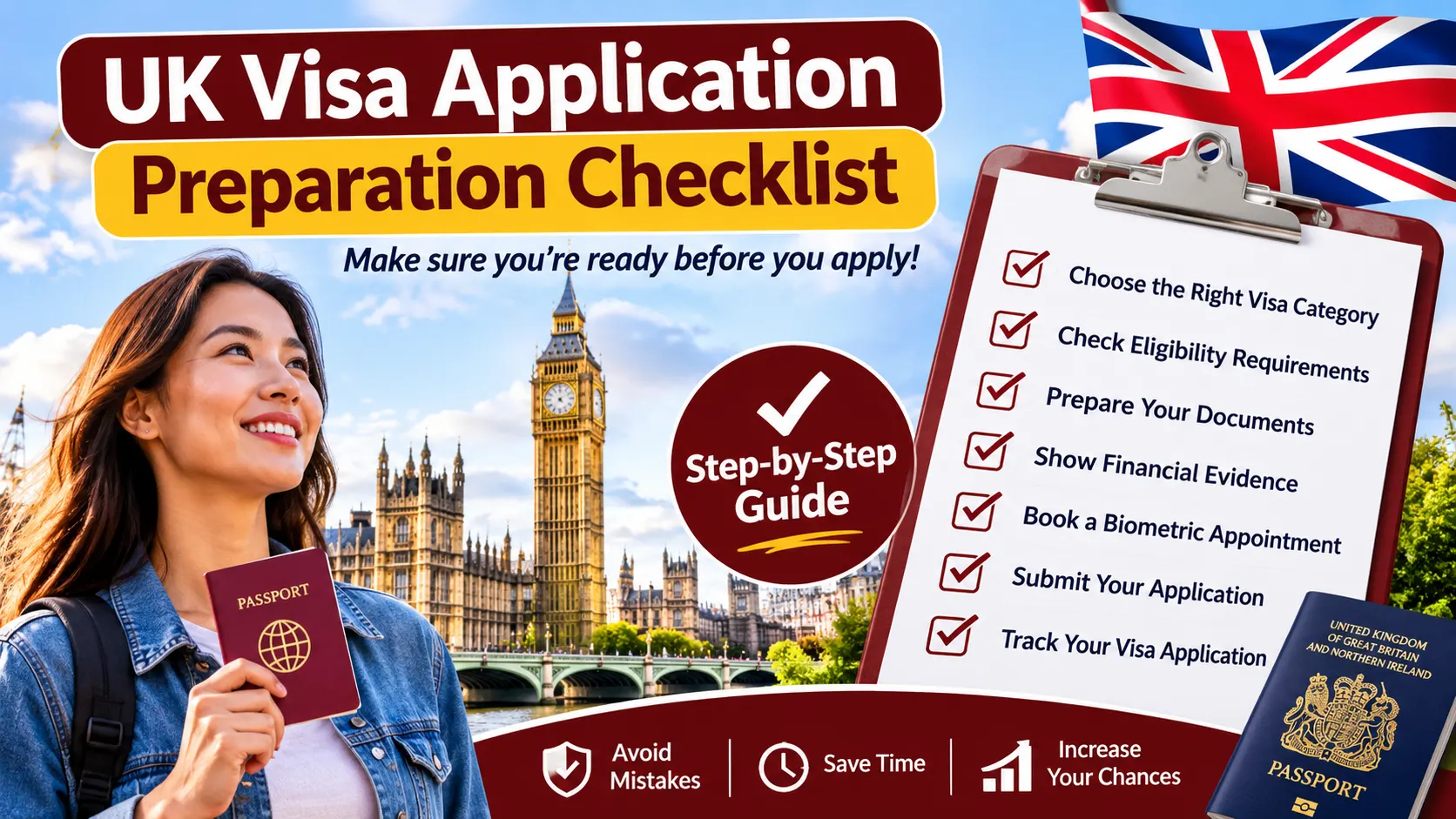
UK Visa Application Preparation Checklist
Use this checklist to review your application before submitting your documents to UK Visas and Immigration (UKVI).
17. Frequently asked questions about Philippines to UK visas
1. Do Filipinos need a visa to travel to the UK?
Yes. Filipino citizens travelling on a Philippine passport generally need a visa before travelling to the UK. The type of visa depends on whether the purpose is tourism, study, employment, family migration or another permitted activity.
2. How much is a UK Visitor visa from the Philippines in 2026?
The Standard Visitor visa fee for a visit of up to six months is £135 under the Home Office fee schedule effective from 8 October 2026. Longer-term visitor visas cost £506 for two years, £903 for five years and £1,128 for ten years. Check the official fee page before applying.
3. How long does a UK visa take from the Philippines?
Many overseas Standard Visitor, Student and Skilled Worker applications are usually processed within three weeks after the required identity or biometric steps. Family partner applications usually take around 12 weeks. These are standard targets, not guaranteed decision dates.
4. Can I apply for a UK visa online from the Philippines?
Yes. Most UK visa applications begin online through GOV.UK. Depending on the route, you will then need to attend a visa application centre to provide biometrics and complete the document submission process.
5. Can I visit my family in the UK on a Visitor visa?
Yes. Visiting relatives or friends is a permitted activity under the Standard Visitor route. You must still demonstrate that you meet the visitor requirements, including having a genuine reason for the visit and intending to leave the UK at the end of your stay.
6. Can I work in the UK on a Visitor visa?
No. A Standard Visitor visa does not normally permit paid or unpaid employment for a UK company or self-employment. Certain limited business activities are allowed, but they are not the same as taking a job.
7. Can a Filipino apply for a UK Student visa?
Yes. Filipino students can apply if they have an eligible offer from a licensed student sponsor, receive a CAS and meet the financial, English-language and other requirements.
8. How much money do I need for a UK Student visa?
You generally need to show the required course fees and living costs. The published maintenance requirement is £1,529 per month for study in London and £1,171 per month outside London, for up to nine months. Your exact requirement depends on your circumstances and any applicable exemption.
9. Do I need a TB test for a UK visa from the Philippines?
You generally need a TB test if you are applying to come to the UK for six months or longer and meet the residence conditions in the TB rules. You must use a Home Office-approved clinic. Some routes and circumstances are exempt.
10. Can I track my UK visa application from the Philippines?
Yes. Applicants can use the VFS Global tracking service for the Philippines. You will generally need the reference number on your application centre receipt and your surname.
11. Can I apply for a ten-year UK Visitor visa?
Yes, you can apply for a long-term Standard Visitor visa valid for up to ten years if you visit the UK regularly. However, each visit is normally limited to six months. A ten-year visa does not allow you to live in the UK continuously.
12. Can I bring my spouse or children to the UK on a Student visa?
Only certain Student visa holders can bring dependants. Eligibility is restricted and depends on the course and sponsorship circumstances. Check the current dependant rules before making plans.
13. Can I settle permanently in the UK after arriving from the Philippines?
Some immigration routes can lead to settlement, but others cannot. For example, an eligible partner route or Skilled Worker route may lead to ILR if the applicant meets the qualifying residence and other requirements. A Standard Visitor visa does not provide a settlement route.
14. What happens if my UK visa application is refused?
Read the refusal notice and identify the specific reasons for the decision. Depending on the route and circumstances, you may be able to submit a new application or use an available review or appeal procedure. Address the refusal reasons before applying again.
15. Can I travel to the UK while my visa application is still being processed?
You should not travel on the assumption that your application will be approved. Wait for the decision and follow the passport and travel instructions provided by UKVI.
16. Is an invitation letter enough to get a UK Visitor visa?
No. An invitation letter can help explain the purpose of a visit and the arrangements with a UK host, but it does not guarantee approval. You must still meet the visitor eligibility requirements and provide evidence that supports your application.
18. Official UK visa resources for applicants in the Philippines
Use official government and application-centre sources to check the latest rules, fees, forms and appointment information. Immigration requirements can change, so these pages should be checked again immediately before applying.
| Official resource | What it helps you check |
|---|---|
| Check if you need a UK visa | Visa requirement based on nationality and purpose |
| Standard Visitor visa | Visitor eligibility and permitted activities |
| Apply for a Standard Visitor visa | Online application process and visitor fee |
| Student visa | Student eligibility, fees and conditions |
| Student visa financial requirements | Course fees and maintenance funds |
| Skilled Worker visa | Sponsored employment requirements |
| Family visa | Joining a qualifying family member |
| Family visa financial requirements | Partner income and financial evidence |
| UK visa fees | Official immigration application fee schedule |
| Visa processing times outside the UK | Current standard processing guidance |
| TB testing in the Philippines | Approved clinics and test information |
| VFS Global Philippines – UK visas | Appointment and application-centre information |
| Track a UK visa application | Application tracking |
| UK eVisa guidance | Accessing and checking digital immigration status |
Final thoughts: Choose the right UK visa before you apply
Applying for a Philippines to UK visa is easier to manage when you understand the purpose of your journey, select the correct immigration route and prepare evidence that supports your circumstances.
A visitor application needs to explain the reason for travel, available funds and intention to leave. A Student visa requires a valid CAS and the necessary financial evidence. A Skilled Worker application depends on an eligible sponsored job, while a Family visa requires evidence that the relationship and financial conditions meet the relevant rules.
The most important step is to plan before submitting the application. Check the latest official requirements, review the documents carefully and allow enough time for processing. A well-prepared application gives UKVI a clearer picture of your circumstances and helps you avoid preventable mistakes.
AYJ Solicitors can assist with understanding UK immigration routes and the requirements that may apply to your circumstances. If your situation involves a previous refusal, complex financial evidence, sponsorship or family immigration, consider obtaining advice before submitting an application.